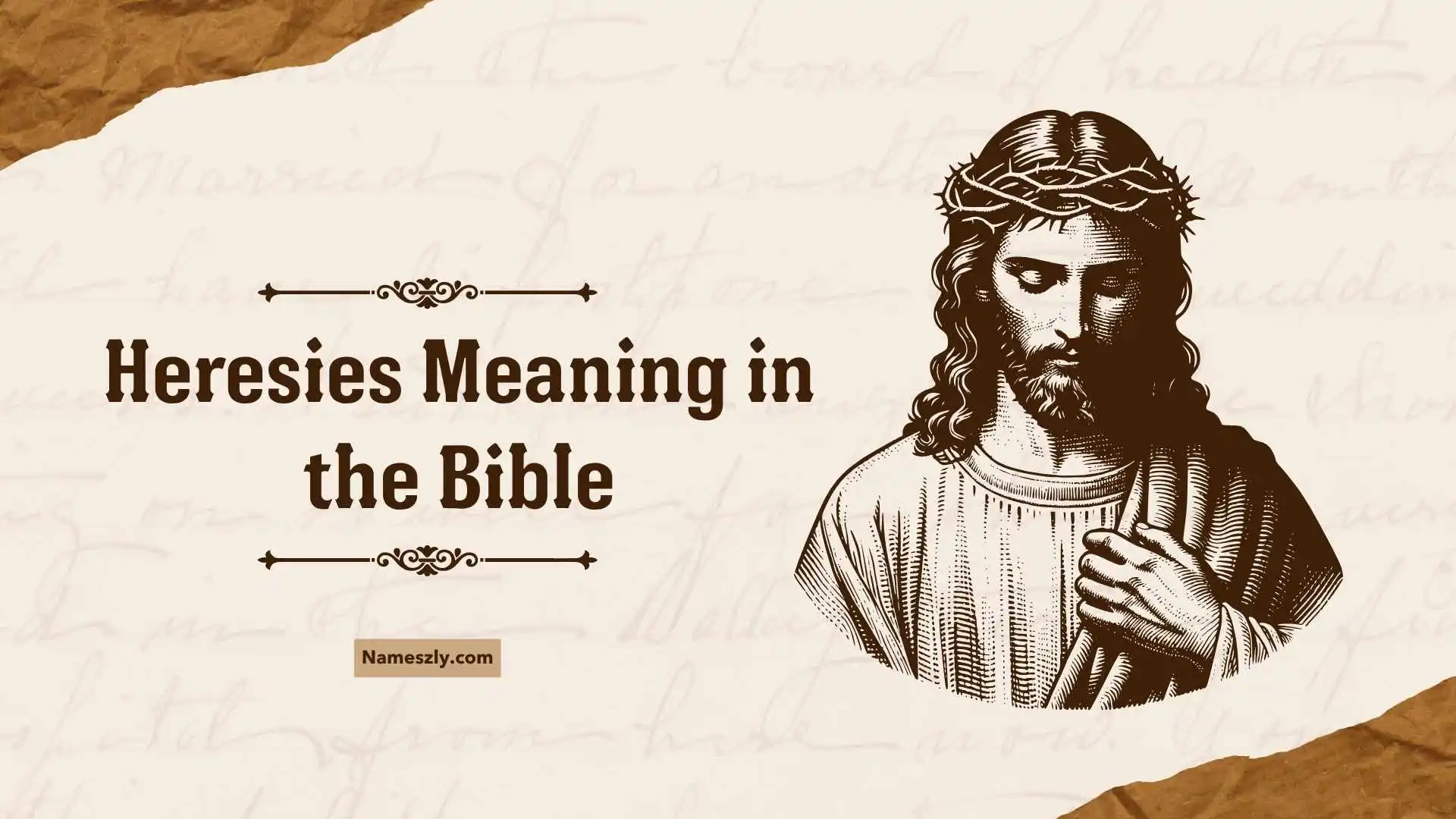
Have you ever wondered what the Bible means when it talks about heresies? The word sounds serious and it is. Throughout Christian history, heresies have played a major role in shaping beliefs, dividing communities, and influencing how people understand God’s truth.
In simple terms, heresies in the Bible refer to false teachings or beliefs that go against the core message of Scripture. But there is much more depth behind this idea. To fully understand it, we need to explore its meaning, origin, biblical usage, historical background, and spiritual importance.
In this detailed guide, we will break down everything about “Heresies Meaning in the Bible” in a simple, easy-to-read, and SEO-friendly way. Whether you are a student of theology, a curious reader, or someone seeking spiritual clarity, this article will help you understand the concept clearly.
Heresies Meaning in the Bible Explained
The word heresies in the Bible refers to beliefs, teachings, or doctrines that contradict the truth of God’s Word.
In the New Testament, the word is translated from the Greek term “hairesis”, which originally meant “a choice” or “a sect.” Over time, however, it developed a negative meaning—referring to divisions caused by false teachings.
Biblical Meaning of Heresy
In a biblical context, heresy means:
- Rejecting or twisting the true teachings of Scripture
- Promoting beliefs that lead people away from Christ
- Creating divisions within the church
- Following human ideas instead of God’s truth
For example, the Apostle Paul warned believers many times about false teachings that could destroy faith and unity.
👉 In simple words, heresy is any belief that conflicts with the core message of the Bible.
Origin and Etymology of Heresies
Understanding the origin of the word helps us see how its meaning evolved.
Greek Origin
The term comes from the Greek word:
- “hairesis” (αἵρεσις)
Originally, it meant:
- A choice
- A philosophical school or group
- A sect or division
However, in early Christian writings, it began to take on a negative meaning.
Shift in Meaning
As Christianity grew, leaders started using “heresy” to describe:
- Divisions in the church
- False teachings about Jesus
- Distorted interpretations of Scripture
Latin Influence
The Latin word haeresis carried the same idea and was used in early translations of the Bible and church writings.
👉 Therefore, the modern meaning of heresy = false doctrine or unbiblical belief developed over time through religious usage.
Heresies in the Biblical Context
The Bible does not ignore the danger of heresies. In fact, it repeatedly warns believers about them.
Key Bible Verses About Heresies
Here are some important passages:
1. 2 Peter 2:1
False teachers will secretly introduce destructive heresies, even denying the Lord.
👉 This verse clearly shows that heresies are dangerous because they can lead people away from Christ.
2. Galatians 5:20
Paul lists “heresies” among the works of the flesh.
👉 This shows that heresy is not just intellectual error it is a spiritual problem.
3. Titus 3:10
A divisive person should be warned, and if they continue, avoid them.
👉 Division caused by false teaching is taken very seriously in Scripture.
4. 1 Corinthians 11:19
There must be divisions among you so that those who are genuine may be recognized.
👉 Here, Paul acknowledges that heresies reveal true faith from false belief.
Importance of Understanding Heresies in the Bible
Why is it important to understand heresies today?
1. Protects Spiritual Truth
Understanding heresies helps believers:
- Recognize false teachings
- Stay grounded in Scripture
- Avoid deception
2. Strengthens Faith
When you know what is false, you better understand what is true.
3. Maintains Church Unity
False teachings often cause division. Recognizing them helps preserve unity among believers.
4. Encourages Discernment
Believers are called to test every teaching:
“Test everything; hold fast what is good.” – 1 Thessalonians 5:21
Common Types of Heresies in the Bible
Throughout history, several false teachings have been identified as heresies.
1. Denying the Divinity of Christ
Some groups taught that Jesus was only human.
👉 The Bible clearly teaches that Jesus is both God and man.
2. Salvation by Works Alone
This belief says people can earn salvation through actions.
👉 Scripture teaches salvation is by grace through faith.
3. False Teachings About the Trinity
Some deny the Father, Son, and Holy Spirit as one God.
4. Legalism
Adding extra rules for salvation beyond what Scripture teaches.
5. Gnosticism
An early belief system that claimed secret knowledge was needed for salvation.
Historical Context of Heresies in Christianity
Heresies were not just theoretical issues they shaped the early church.
Early Church Struggles
In the first centuries, Christians faced many false teachings:
- Misinterpretations of Jesus’ nature
- Confusion about resurrection
- Mixed pagan beliefs entering Christianity
Church Councils
To address heresies, early leaders held councils:
- Council of Nicaea (325 AD)
- Council of Chalcedon (451 AD)
These councils helped define core Christian beliefs.
Role of Apostles
The apostles repeatedly warned about heresies in their letters, showing how serious the issue was even in early Christianity.
Importance of Heresies Meaning in Modern Times
Even today, heresies still exist in different forms.
Modern False Teachings May Include:
- Prosperity gospel distortions
- Denying Jesus’ resurrection
- Misinterpreting Scripture for personal gain
- Blending Christianity with non-biblical beliefs
Why It Still Matters Today
Understanding heresies helps modern believers:
- Stay faithful to Scripture
- Avoid spiritual confusion
- Strengthen biblical knowledge
Related Terms or Similar Concepts
To fully understand heresies, it helps to know related biblical concepts:
1. False Doctrine
Teachings that go against biblical truth.
2. Apostasy
Turning away completely from faith.
3. Schism
Division within the church.
4. Blasphemy
Speaking against God or sacred truths.
5. Deception
Being misled by false ideas or teachings.
Uses and Examples of Heresies in Scripture
The Bible uses the concept of heresy to:
1. Warn Believers
Paul often warned churches to stay alert.
2. Correct False Teachers
Many letters in the New Testament correct wrong beliefs.
3. Protect Church Unity
Heresies were identified to protect the community.
4. Strengthen Doctrine
Truth becomes clearer when contrasted with falsehood.
Benefits of Understanding Heresies
At first, heresies may seem like a negative topic. However, studying them brings several benefits:
1. Spiritual Awareness
You become more aware of what is true and false.
2. Stronger Biblical Knowledge
You understand Scripture more deeply.
3. Better Discernment
You can identify misleading teachings easily.
4. Strong Faith Foundation
Your belief becomes more stable and rooted.
Common Misconceptions About Heresies
Many people misunderstand the meaning of heresies.
Misconception 1: All Differences Are Heresies
Not every disagreement is heresy. Only teachings that contradict core biblical truth are considered heretical.
Misconception 2: Heresy Means Small Mistake
Heresy is not a minor error it is a serious distortion of truth.
Misconception 3: Only Ancient Churches Faced Heresies
Even today, false teachings exist in many forms.
Misconception 4: Only Leaders Can Commit Heresy
Anyone spreading false teaching can contribute to heresy.
How to Protect Yourself from Heresies
The Bible gives clear guidance to avoid false teachings:
1. Study the Bible Regularly
The more you know Scripture, the easier it is to identify error.
2. Pray for Wisdom
Ask God for discernment.
3. Test Every Teaching
Compare everything with the Bible.
4. Stay Connected to Healthy Teaching
Learn from trustworthy spiritual leaders.
5. Avoid Divisive Teachings
If something causes confusion or division, examine it carefully.
FAQs About Heresies Meaning in the Bible
1. What is the simple meaning of heresies in the Bible?
Heresies mean false teachings or beliefs that go against the truth of Scripture.
2. Is heresy a sin in the Bible?
Yes. The Bible describes heresies as works of the flesh and warns against them.
3. What is an example of heresy?
Denying the divinity of Jesus Christ is considered a major heresy in Christianity.
4. Why are heresies dangerous?
Because they mislead people, create division, and pull believers away from God’s truth.
5. How can I avoid heresies?
By studying the Bible, praying for wisdom, and testing all teachings against Scripture.
Conclusion
Understanding “Heresies Meaning in the Bible” is essential for anyone seeking spiritual truth. Heresies are not just historical issues they are ongoing challenges that affect how people understand God’s Word.
In simple terms, heresies are false teachings that distort biblical truth and lead people away from faith. The Bible consistently warns believers to stay alert, test all teachings, and hold firmly to Scripture.
By learning about heresies, you strengthen your faith, improve your spiritual discernment, and build a stronger foundation in God’s Word.
Ultimately, truth always stands firm, while false teachings fade away.